MEET THE FOLK: JOANIE
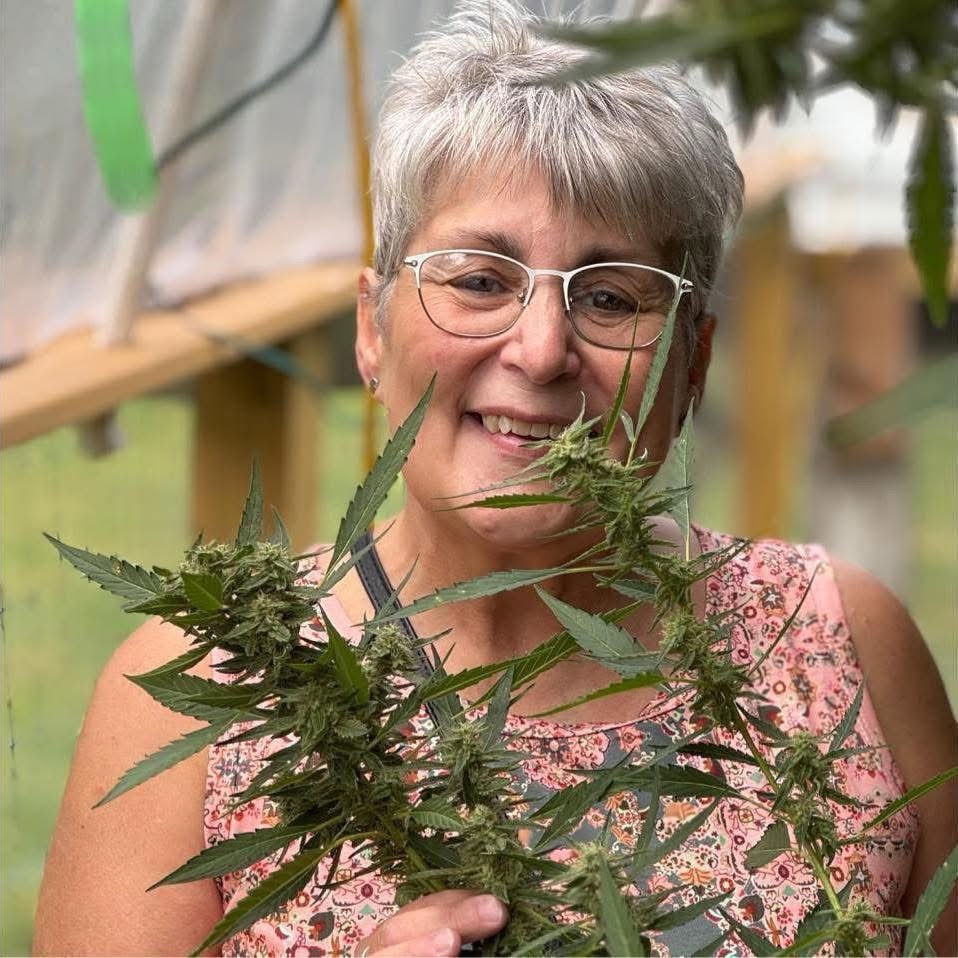
Cannabis culture was built long before legalization.
Before dispensaries.
Before recreational sales.
Before corporate cannabis, million-dollar companies and an entire industry built around the plant.
It was:
Patients searching for relief.
Advocates willing to put their names and faces behind a plant that still carried one hell of a stigma.
People willing to speak up before cannabis was profitable… or even socially acceptable.
And on January 16, 2019, one of those people walked into a dispensary right here in the Ohio Valley and became a piece of Ohio cannabis history.
Her name is Joanie Caleodis.
Some people, though, simply know her as:
“The weed lady.”
And honestly?
Her story is exactly why I created Meet the Folk.
Before she was “the first”
Joanie’s relationship with cannabis didn’t begin with a diagnosis.
She first tried cannabis around 20 or 21 years old. By 23, she was using flower recreationally.
She was young. She liked to smoke.
Simple as that.
Looking back now, though, Joanie recognizes that some of the substances she used during those younger years…particularly alcohol… were also tangled into surviving and coping with things from her past she hadn’t fully processed yet.
Cannabis simply remained part of her life.
Then, at 47 years old, everything changed.
Joanie was diagnosed with Primary Progressive Multiple Sclerosis.
At the time, she says there wasn’t an FDA-approved medication specifically for her form of MS, and doctors tried different medications to manage her symptoms.
Eventually, she found herself taking 16 pills a day.
That’s when her relationship with cannabis started becoming something different.
She wasn’t just interested in smoking anymore.
She wanted to understand the plant.
So she went looking for answers.
About 11 years ago, Joanie drove to Colorado to learn more about medical cannabis and the different ways people were using it.
Because back home, her experience had mostly been flower.
Concentrates, oils, edibles, topicals and all the other forms we talk about so casually today?
That information wasn’t nearly as accessible.
She came back to Ohio with more knowledge and started speaking publicly about medical cannabis.
That connected her with other people fighting the same fight.
One of those people was her dear friend Bill Schmidt Jr. from Bellaire.
Another was Dana, a mother whose son was battling cancer.
Through those relationships, Joanie’s involvement grew. Dana and her son eventually took her to the Ohio Statehouse, where she met then-Senator Kenny Yuko and became even more involved in advocating for medical cannabis access.
This wasn’t about building cannabis brands.
There wasn’t some giant industry waiting to hand these people a sponsorship.
They were patients.
Parents.
Sick people.
People who loved sick people.
People trying to make lawmakers understand that there was another side to this plant beyond the Reefer Madness bullshit generations had been taught.
Eventually, Ohio legalized medical cannabis.
But passing a law and actually being able to walk into a dispensary and legally purchase your medicine are two completely different milestones.
Ohio patients still had to wait for the second one.
Then came January 16, 2019.
An ice storm and a line of patients.
Before dispensaries officially opened, Joanie and a girlfriend had stopped by the future CY+ location in Wintersville.
It wasn’t open yet.
They happened to see some women inside, turned around and went back to ask what was going on.
The staff took their names and numbers and told them they’d be contacted when things started moving toward opening.
A few weeks later, Joanie’s phone rang.
They wanted her to be the first customer.
She gladly accepted.
This was her home.
She was born and raised in Wintersville.
What she didn’t fully understand at first was that she wasn’t just going to be their first patient.
She was about to become part of something much bigger.
The morning finally came.
And Joanie woke up to a damn ice storm.
Her friend who had planned to come couldn’t make it, so Joanie went alone.
When she pulled into the parking lot, she saw a line stretching down the side of the building.
People had driven from all over Ohio.
And they were standing outside in the freezing weather waiting for something patients had spent years fighting for:
legal access to their medicine.
Joanie didn’t know what to do.
She knew she had been invited to make the first purchase, but the people standing outside didn’t.
And she sure as hell didn’t want to walk past a line of patients freezing their asses off and announce that she got to skip everybody.
So she called inside.
Staff told her to come to the door and they’d bring her in.
And that’s when the reality of what was happening really started sinking in.
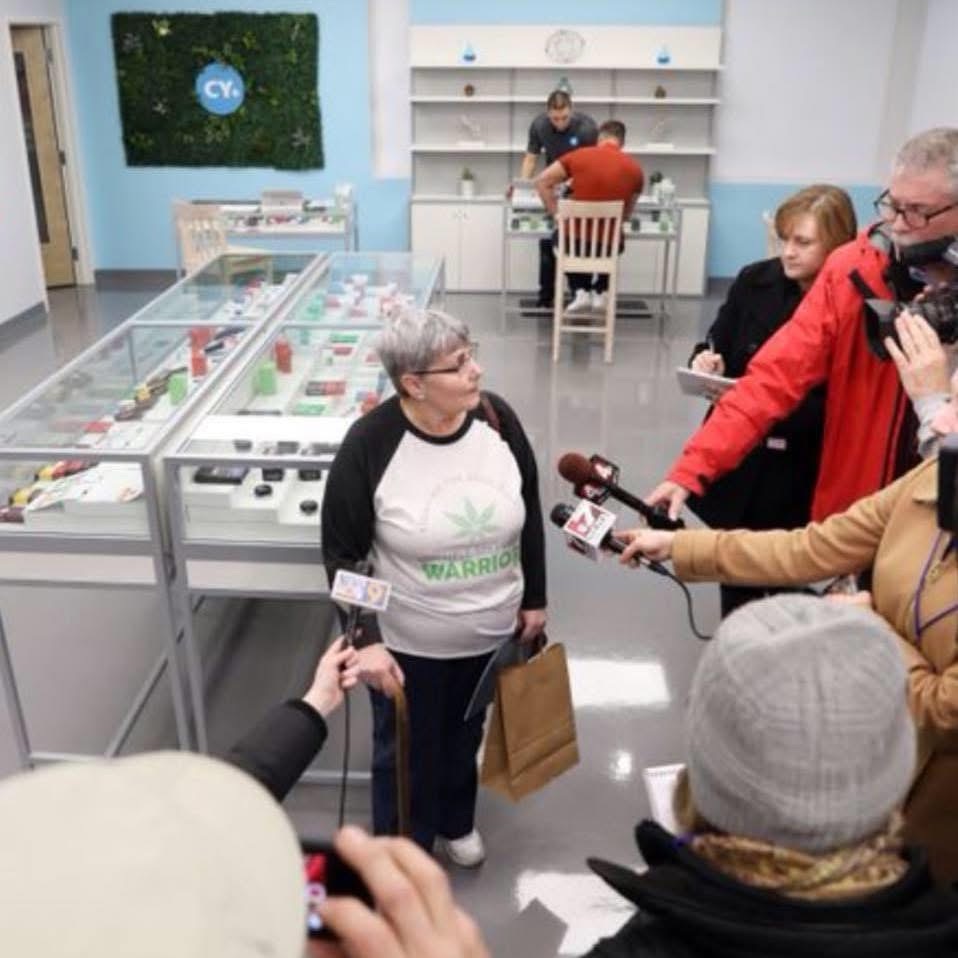
“WOW… media everywhere.”
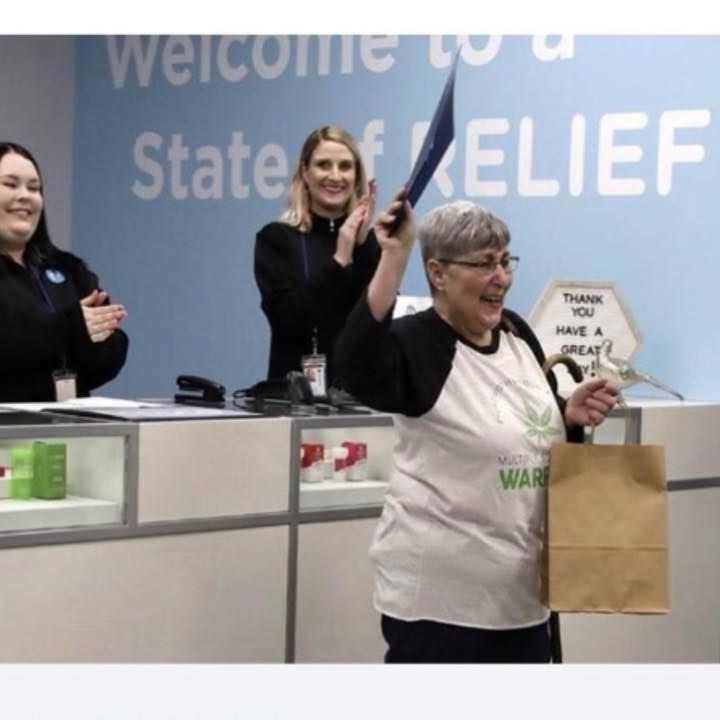
That’s how Joanie remembers walking inside. Cameras. Reporters. State officials. People everywhere.
Even the mayor at the time, Bob Gale, was there.. someone Joanie had graduated with.
At least there was one familiar face in the madness.
Before making her purchase, Joanie met the man who would become the second patient at the dispensary, a veteran who had traveled from the Cincinnati area.
They sat and talked.
Then it was time.
Joanie went back to make her purchase.
At that point, Ohio’s program was brand new and flower was essentially the only thing patients had available.
Joanie bought two strains:
One being Northern Lights.
And with that transaction, an Ohio Valley woman living with Primary Progressive MS became the first person to make an official medical cannabis purchase in the state of Ohio.
There were interviews inside.
More interviews outside.
Her friend Bill was waiting outside recording everything he could.
And suddenly, Joanie wasn’t just a patient anymore. She was part of Ohio cannabis history.
But being first isn’t the best part of Joanie’s story.
Ask Joanie what cannabis has meant to her and she doesn’t spend much time talking about cameras or newspaper articles.
She talks about her life.
At one point, included 16 pills every day.
Today, Joanie says the only medication prescribed for her MS is an Ocrevus infusion every six months. She also has muscle relaxers available as needed, usually taking one at night.
Cannabis remains a regular part of how she manages her symptoms.
By being an edible, dab and topical kinda gal.
And then there’s the pool.
Joanie does water aerobics five days a week… and sometimes more.
She says she was told years ago that disability and eventually a wheelchair could be part of her future.
That was about 16 years ago.
She’s still getting in that pool.
She’s still living her life wheelchair free.
Joanie strongly believes cannabis has played a role in helping her remain active and says she doesn’t believe she’d be living the same life today without it.
That’s her experience.
Her body.
Her story.
And it’s a huge reason she’s continued educating people about cannabis all these years.
“Not all of us want to get stoned.”
If there’s one thing Joanie wishes people understood, it’s that cannabis consumption doesn’t look the same for everybody.
Her first consumption of the day might be a 20 mg gummy before heading to water aerobics.
She may take a dab beforehand.
Then she’ll medicate throughout the day depending on what her body needs.
She rarely even smokes a joint.
And that’s exactly the kind of thing people outside cannabis don’t always understand.
Cannabis isn’t just flower.
It isn’t just smoking.
And every person walking into a dispensary isn’t looking to get blasted and sit on the couch all day.
Somebody’s grandma might be trying to make her joints hurt less.
Someone might be trying to sleep.
Someone might be trying to get through a workout.
Someone might simply be trying to have a normal damn day.
Joanie especially loves seeing people from the older generations embracing cannabis.
People in their 60s and beyond… the same generations who lived through some of the strongest anti-cannabis propaganda… are walking into dispensaries and exploring the plant for themselves.
Seeing the diversity in age makes her smile.
Legalization didn’t finish the fight.
Joanie has now watched Ohio cannabis evolve from prohibition, to medical cannabis, to adult-use legalization.
She’s proud Ohio finally got there.
But that doesn’t mean she believes the system gets everything right.
Far from it.
Patients, she believes, can easily get buried underneath the business of cannabis.
She remembers what accessing medicine cost when Ohio’s medical program first started.
She had to travel to Columbus for appointments. Between the initial appointment and follow-up, she says she spent around $300 just getting established.
Things have changed considerably since then.
But affordability still matters.
Joanie watched medical cannabis prices finally begin coming down after years of patients paying high prices, only to watch the market shift again when adult-use sales arrived.
And she hasn’t forgotten who the program was originally built for.
Patients.
She kept her medical recommendation after adult-use legalization and intends to continue doing so.
For her, being a cannabis patient isn’t suddenly irrelevant because adults can legally consume now.
She fought to be a patient.
That means something.
And then there’s home grow.
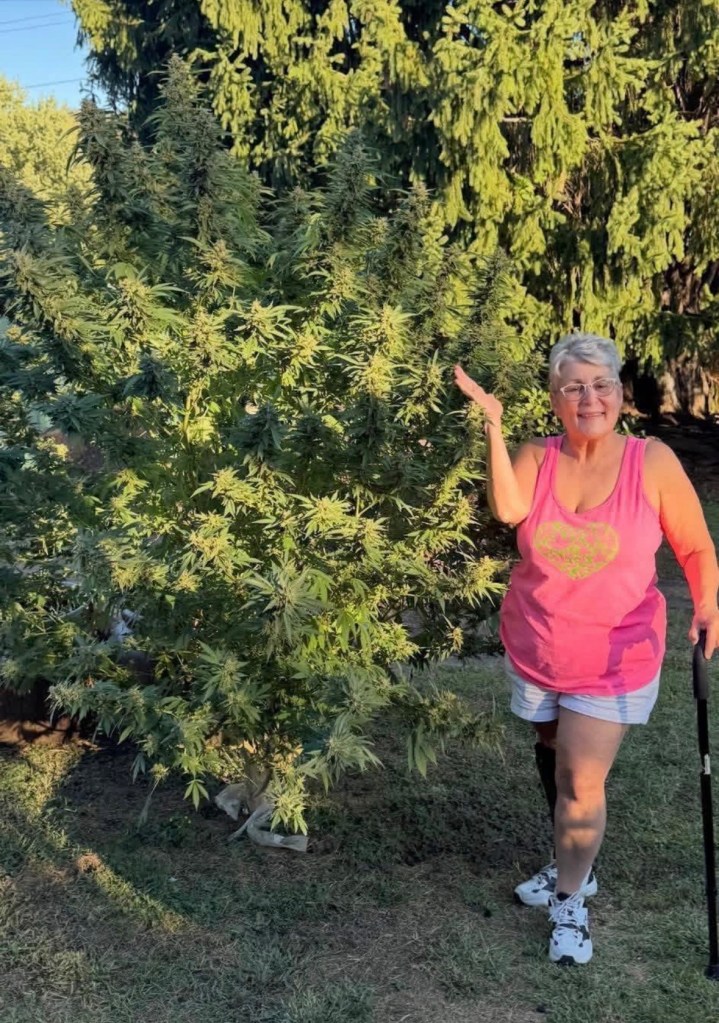
Joanie also worked locally on the adult-use legalization campaign and was proud when Ohio voters approved legalization—including the ability for Ohioans to grow cannabis at home.
She’s a home grower herself.
And this is one area where she believes lawmakers often show just how disconnected they are from the actual plant.
Last year, Joanie says she pulled close to four pounds from one plant.
One.
Plant.
So when lawmakers create possession limits while simultaneously allowing people to legally cultivate cannabis at home, Joanie sees a pretty obvious problem:
Cannabis doesn’t grow according to a number somebody wrote on a piece of paper.
A healthy plant doesn’t stop producing because the law says you’ve reached your limit.
And those are the kinds of conversations she believes need more input from people who actually know this plant.
Not just politicians.
Not just corporations.
Growers. Patients. Consumers.
The Folk.
Because patients can’t become an afterthought.
That’s probably the biggest thing I took away from talking with Joanie.
Cannabis becoming legal doesn’t mean the work is finished.
If anything, legalization created a whole new responsibility:
Remembering how we got here.
Because it’s really easy to look around now and forget.
There are dispensaries.
Billboards.
Brands.
Corporate grows.
Adult-use customers.
Millions upon millions of dollars moving through the industry.
Cannabis looks like business now.
But it wasn’t always business.
Before all of that, people were risking judgment, careers and reputations just for saying this plant helped them.
People were traveling to other states to learn.
Parents were advocating for sick children.
Patients were walking into the Statehouse asking lawmakers to listen.
Veterans were driving across Ohio just for legal access.
People were standing outside in an ice storm waiting for medicine.
And on January 16, 2019, Joanie happened to be the woman who walked through the door first.
So what does she want people to remember?
Not just that she was first.
Remember why she was there.
A 56-year-old woman with Primary Progressive Multiple Sclerosis walked into a dispensary in her own home community and legally purchased cannabis after years of living in a completely different reality.
Remember that at one point she was taking 16 pills a day.
Remember that more than a decade after being told a wheelchair could be part of her future, she’s still fighting like hell to keep herself moving.
She’s still getting in that pool.
Still educating.
Still advocating.
Still growing.
Still consuming.
Still talking about this plant.
And yes…
Still being introduced as “the weed lady.”
I couldn’t think of a better person to start Meet the Folk Friday with.
Because this series isn’t about who’s biggest in cannabis.
It’s not about who has the most followers, the biggest facility or the prettiest packaging.
It’s about remembering the people behind the plant.
The ones who were here before legalization.
The ones who fought for it.
The ones who needed it.
The ones still pushing it forward.
People like Joanie.
Because cannabis culture was built by people long before it was built by companies.
And those stories deserve somewhere to live.
This is Meet the Folk.
One plant. One passion. One people
 Budfolk Collective
Leave a comment